|
Butterflies
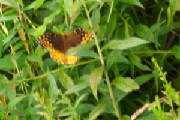
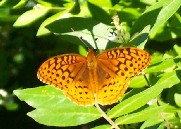
Great Spangled Fritillary (Speyeria cybele ): The
most common Fritillary in the east. The upper specimen is probably an older female. Lower specimen is a young male. Location:
Highland Scenic Highway, MNF, WV/ Pine Lick Trail, Green Ridge State Forest, MD, respectively.
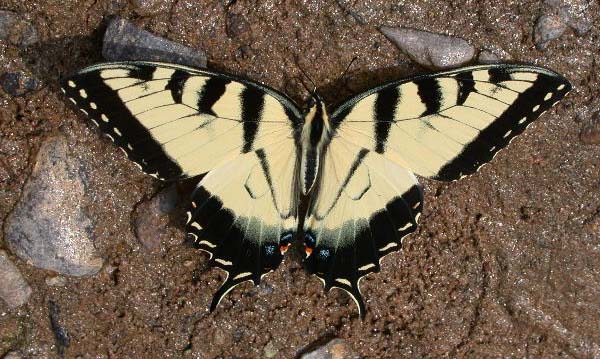
Swallow Tail Butterfly (Papilio glaucas): Photo by Ken Clark.
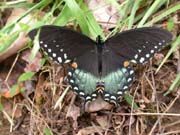
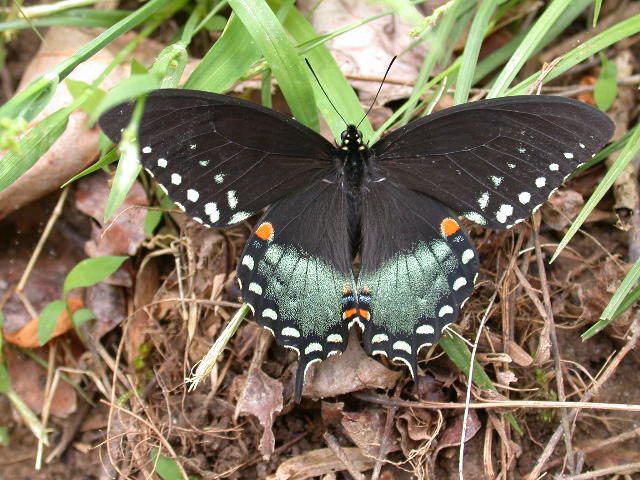
Spicebush Swallowtail (Papilio troilus): Photo by Ken
Clark.

Two Zebra Swallow Tails (Eurytides marcellus ) , a Skipper and a Red Spotted Purple
playing on .... something ... on Massanutten Tr, GWNF, VA.
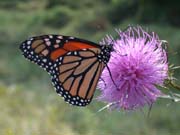
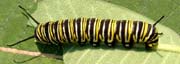
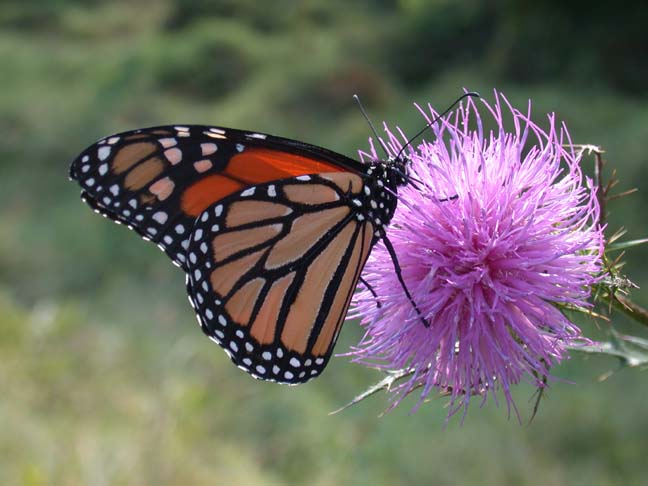
Monarch Butterfly (Danaus plexippus): Some Monarchs are
toxic to predatory birds because of the juices from certain milkweed that they consume. Their orange color signals a warning
to birds to leave them alone. Other orange butterflies are often called "mimics" because it is thought this color causes birds
to also leave them alone even though they are not toxic. Photo by Ken Clark taken at the Howard County Conservancy, Woodstock,
MD. Caterpillar was found on the Roaring Plains, MNF, WV. Photo by Eric Shereda.
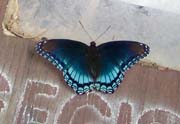
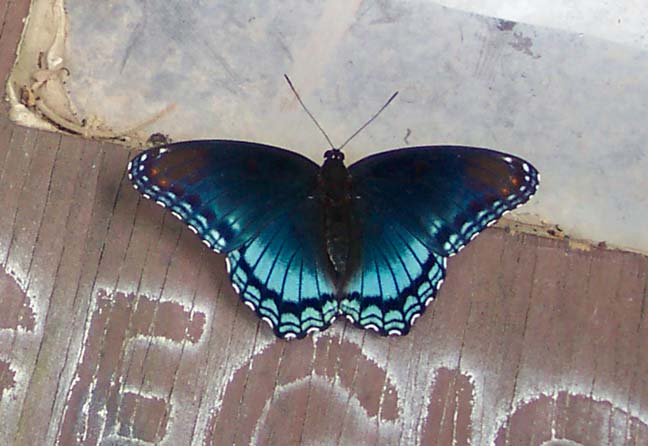
Red Spotted Purple (Limenitis arthemis): Location: Pine
Lick Trail and Fifteen Mile Creek Rd, Green Ridge State Forest, MD.
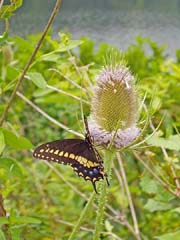
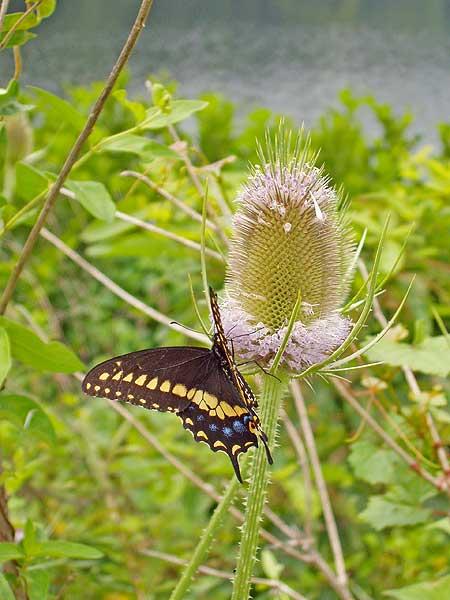
Black Swallow Tail, Papilio polyxenes, on Pickerel
Weed: Double row of yellow spots sets it off from similar species. Location: GRT Wildlife Refuge, VA. Photo by Tony Van Vugt.
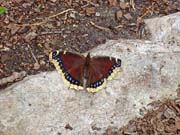
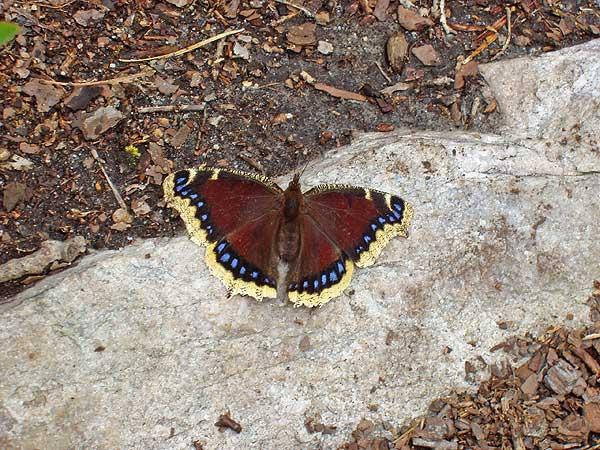
Mourning Cloak, Nymphalis antiopa, One of the first butterflies
to set flight in spring. Location: Little Passage Creek, Massanutten Mt, GWNF, VA. Photo by Tony Van Vugt.
Moths
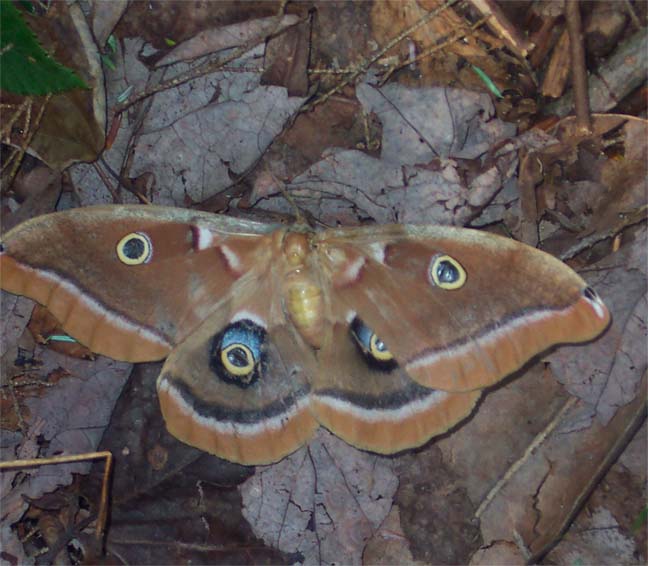
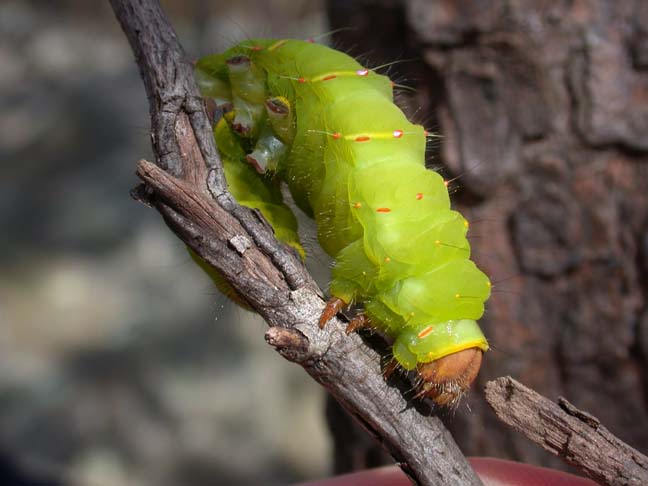
Polyphemus Moth (Antheraea polyphemus): The false eyes on
the wings help to ward off predators. Location: Moore Run Trail, Otter Creek Wilderness, MVF. Caterpillar Photo at Great Falls
National Park, MD by Ken Clark.
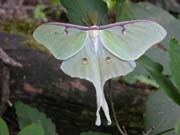
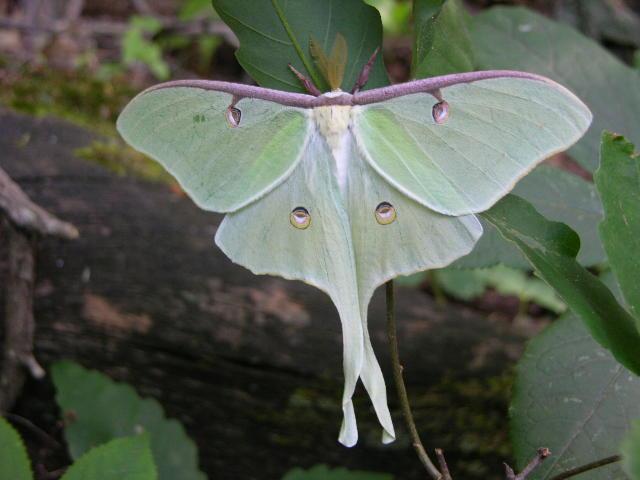
Luna Moth (Actias luna)
: Nocturnal. This one was found sleeping on the underside of a leaf on Pond Run Tr, Great North Mt, GWNF, WV. Photo
by Ken Clark.
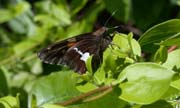
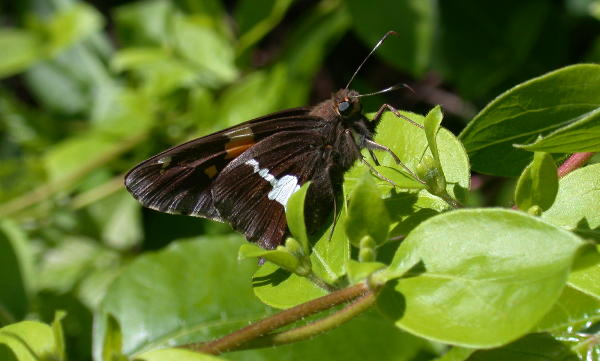
Silver-spotted Skipper (Hesperia comma): Photo by Ken
Clark.
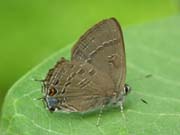
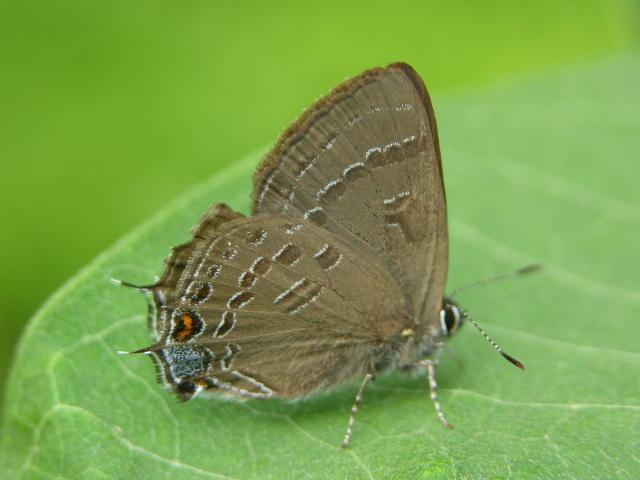
Banded Hairstreak (Satyrium calanus):
Found on Milkweed along Waites Run, Great North mountain, GWNF, WV. Photo by Ken Clark.
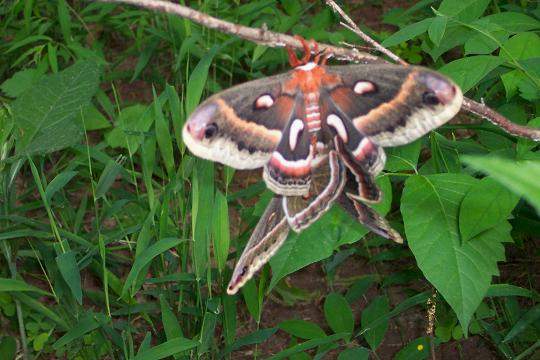
Cecropia moth (Hyalophora cecropia): With a wing span between 5 and 6 inches this is the largest moth north of the Rio Grande!
Shown here copulating. Location: Long Pond Trail, near Long Pond, Green Ridge State Forest, MD.
|
 |
|
|

Hummingbird Moth (Hemaris thysbe): Clear wings and a long probiscus along with its ability to hover
gives this guy its name. Location: Dolly Sods North, Bear Rocks Tr, MNF, WV.
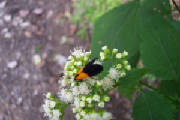
Orange (Yellow) and Black Lichen Moth (Lycomorpha pholus
): One of several varieties.The caterpillars of these species eat lichen, hence
the name!
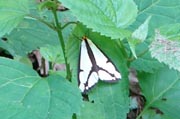
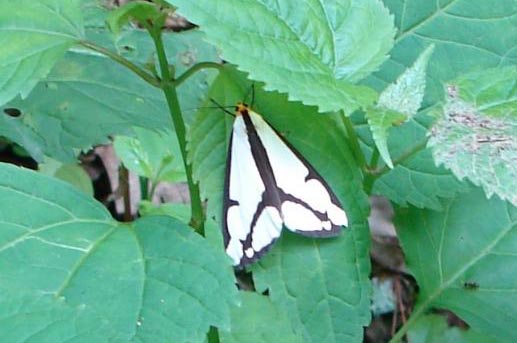
Leconte's Haploa (Haploa lecontei):Related to the above Lichen Moth.Location: Allegheny Tr, WV. Photo
by Pat Roberts.
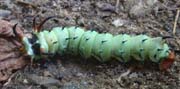
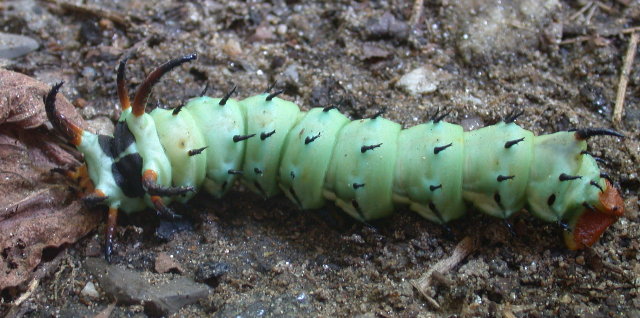
Hickory Horned Devil: The juvenile form of the orange and brown
Royal Walnut Moth (Citheronia regalis). THe horns are not sharp or poisonous. It just looks
mean. Photo by Ken Clark.
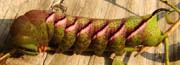
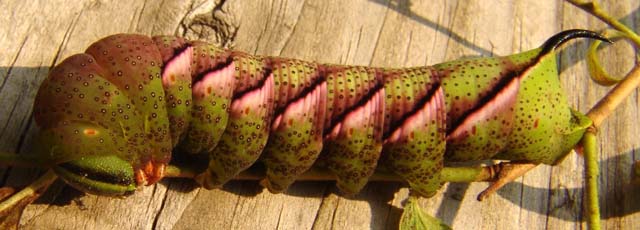
Northern Apple Sphinx (Sphinx poecila): The caterpillar
of a hawk moth. Location: Roaring Plains, MNF, WV. Photo by Eric Shereda.
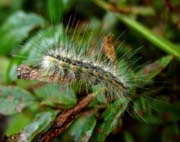
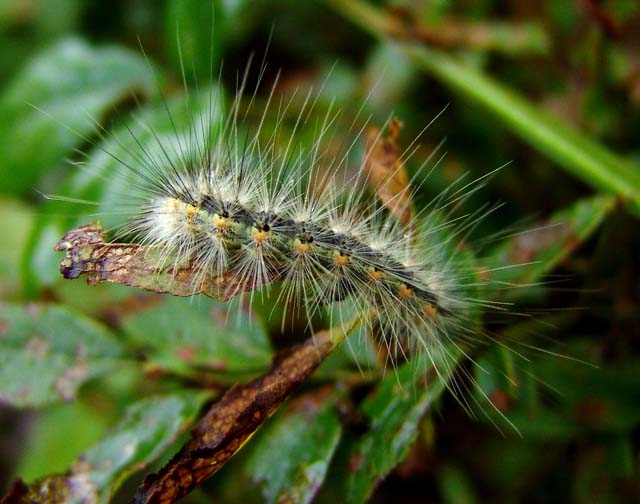
Hyphantria cunea: The caterpillar of the Fall Webworm
Moth which is small and snow white. Location: Roaring Plains, MNF, WV. Photo by Eric Shereda.
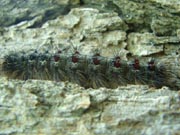
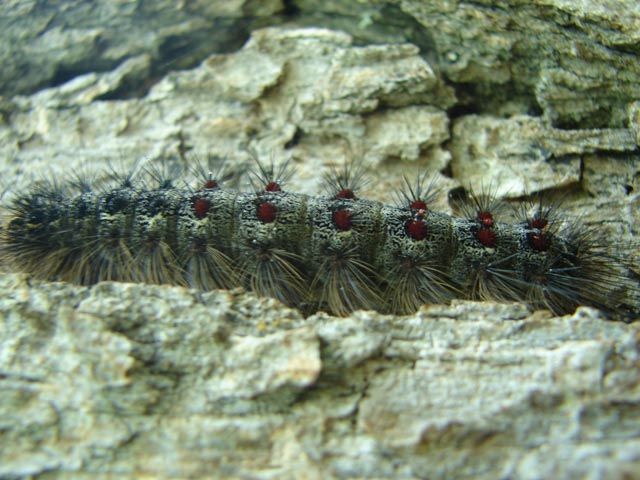
Gypsy Moth caterpillar (Lymantria dispar): Brought to N.Y. to crossbreed with silk worms. Some escaped.
They are now found throughout the U.S. Capable of totally defoliating entire Oak Forests which eventually die. Location: Allegheny
Tr, WV. Photo by Pat Roberts.
Dragonflies
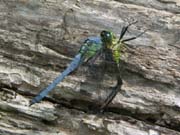
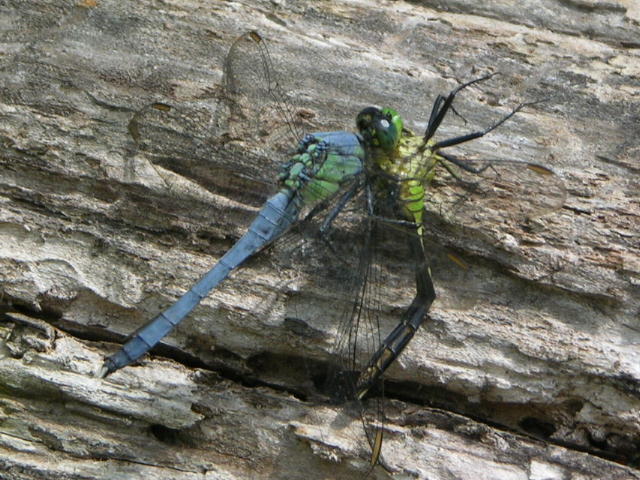
Male (blue) Pondhawk (Erythemis
simplicicollis): Predatory Dragonfly eating a recent victim.
Photo by Ken Clark.
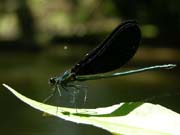
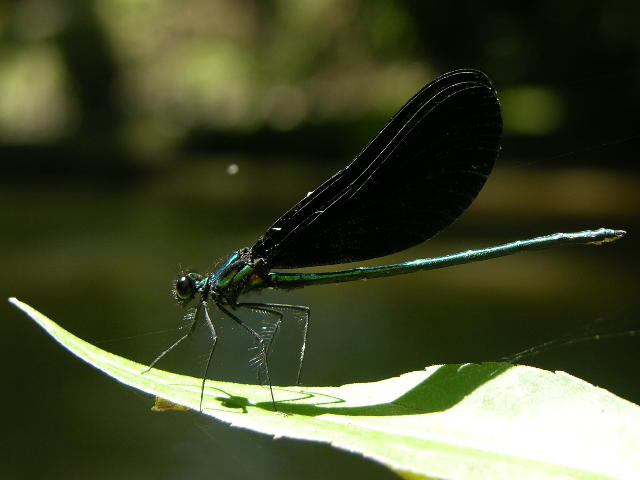
Ebony Jewelwing (Calopteryx maculata):
Female has a white spot on the wing. Photo by Ken Clark taken at the Middle Patuxent Environmental Area, Columbia, MD.
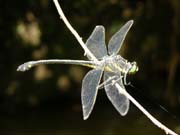
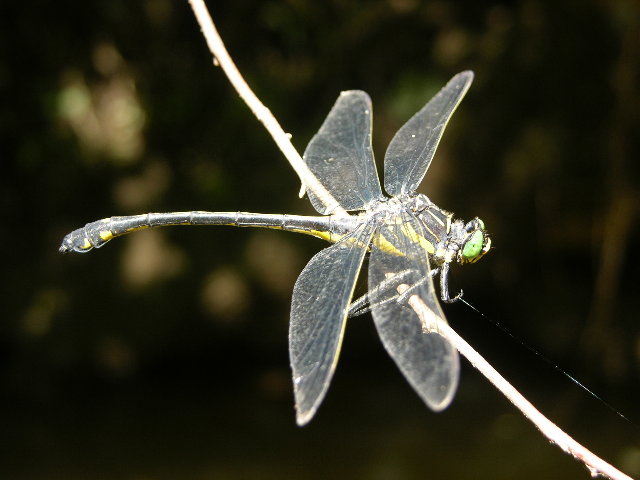
Dragon Hunter (Hagenius brevistylus):
Preys on insects, even other dragonflies. Photo by Ken Clark taken at Savage Park, Middle Patuxent River, MD.
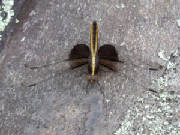
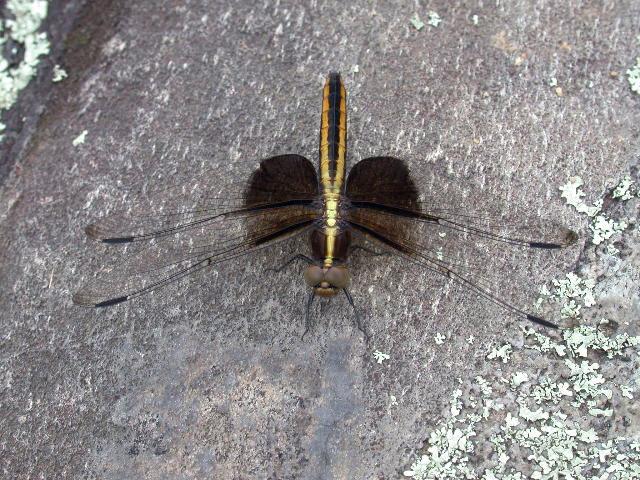
Widow Skimmer Dragonfly (Libellula luctuosa): Photographed
by Ken Clark on The Billy Goat Trail Hike, Great Falls National Park, MD.
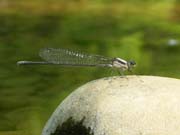
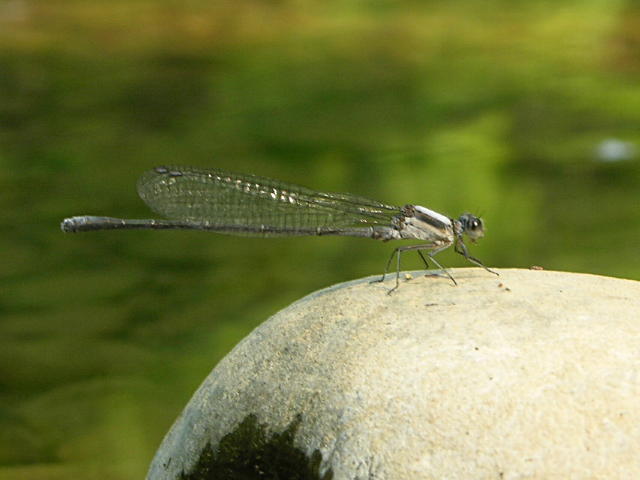
Powdered Dancer Damselfly (Argia moesta): Very
common. Prefers moving streams. Can stay submereged for up to an hour while depositing eggs on submerged rocks and wood. Location:
Long Pond Trail, GRAF, MD. Photo by Ken Clark.
Spiders
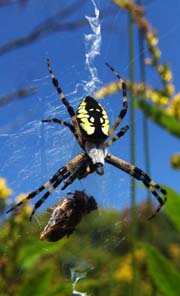
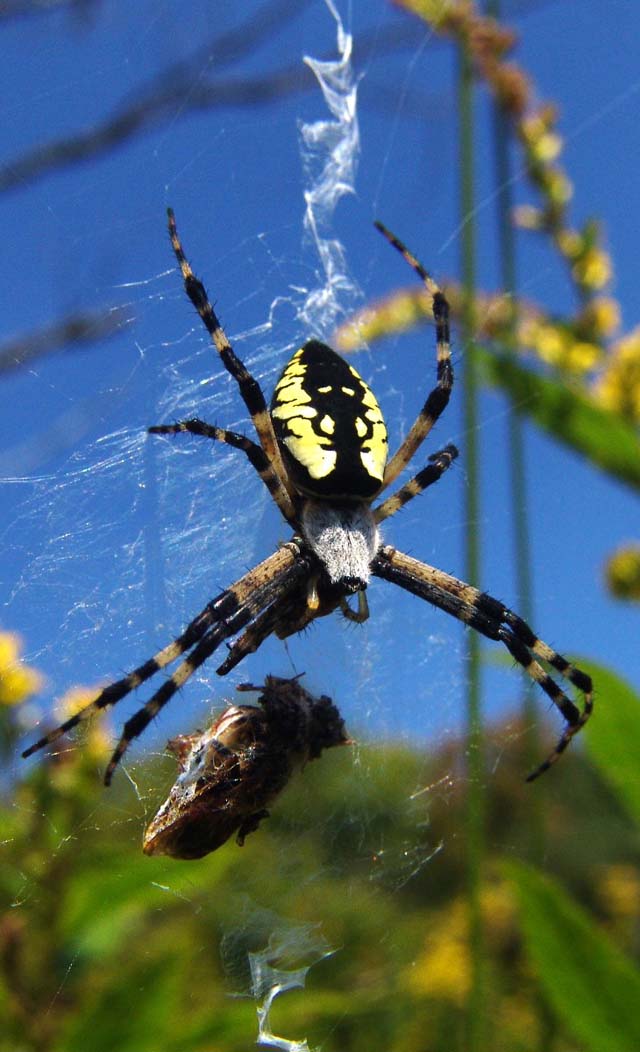
Yellow and Black Garden Spider (Argiope aurntia): Gardens
and meadows. Season: Summer/Fall. Location: Dolly Sods North. Photo by Eric Shereda.
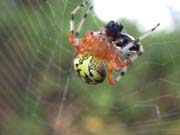
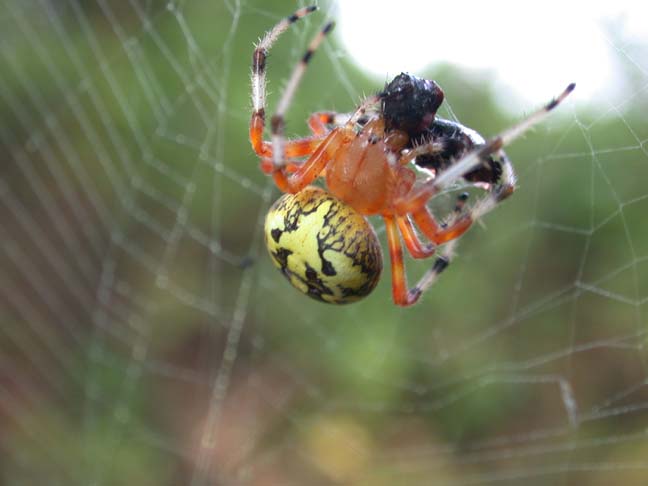
Marbled Orb Weaver (Araneus marmoreus): Photo by Ken Clark
taken at the Howard County Conservancy, Woodstock, MD.
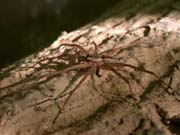
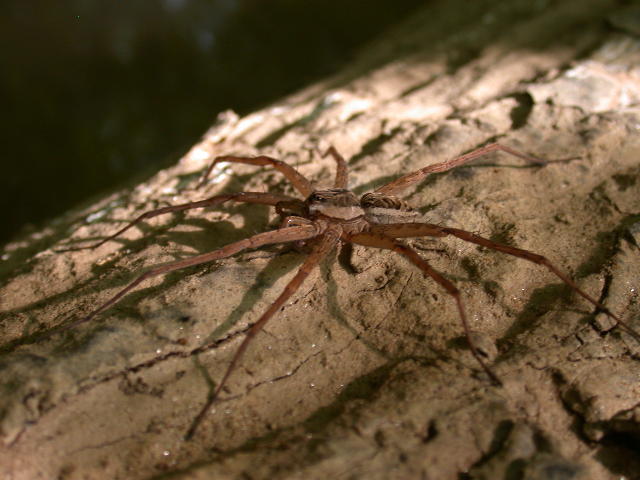
Six Spotted Fishing Spider (Dolomedes triton): Yes, they
catch and eat small fish. Photo by Ken Clark taken at Savage Park, Middle Patuxent River, MD.
|
|
|
|
|
Other Creepy Crawlers
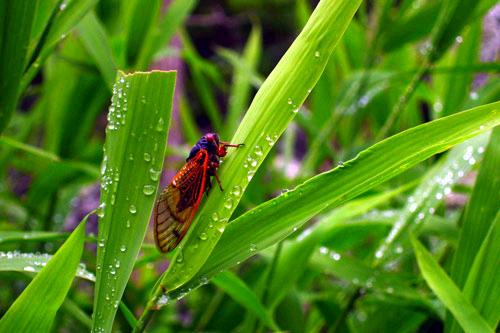
Periodic Cicada (Magicicada septendecim): OK, OK! I know you're tired of them but this is the last one
until 2021, I promise! Photo by Doug Trimble. Location: Everywhere!
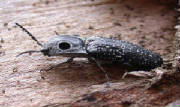
Eastern Eyed Click Beetle (Alaus oculatus ): Grows to 2 inches. Note the false eyes on its back. It and other species
are called click beetles because of the sound they make when snapping there backs in an attempt to escape predators. Location:
Piney Ridge Trail, SNP, VA. Photo by Ken Clark.
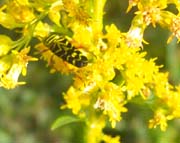
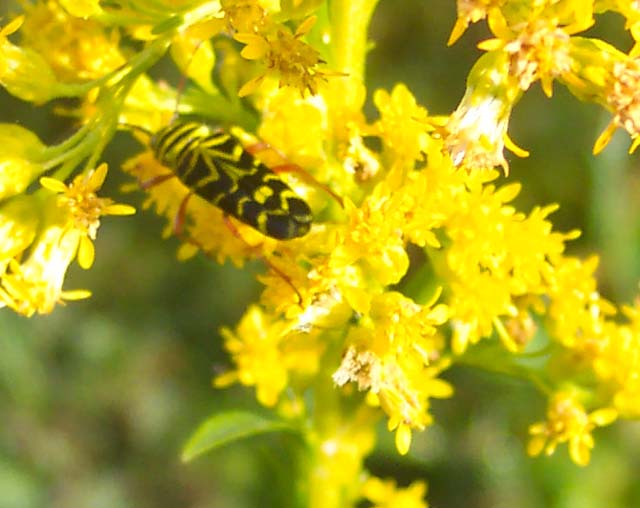
Locust Borer (Megacyllene robiniae): Literally capable
of boring through the hard wood of a locust. The adult's color pattern provides excellent camoflauge in Golden Rod species.
Location: Hidden Passage, MNF, WV.
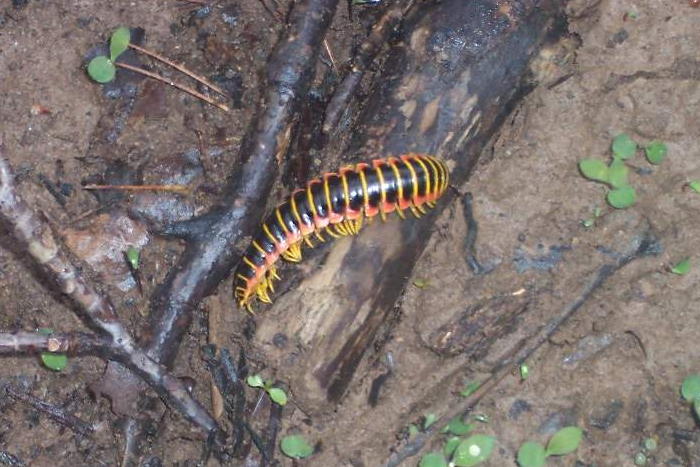
A millipede in the Genus Polydesmida, specifically a Red-sided
Flat Millipede, Sigmoria aberrans (AKA Almond Millipide because of the odor it emits when it feels threatened.) I've
seen it twice in the same Forest (Green Ridge State Forest, MD), both times near water.
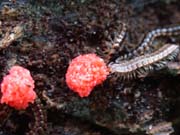
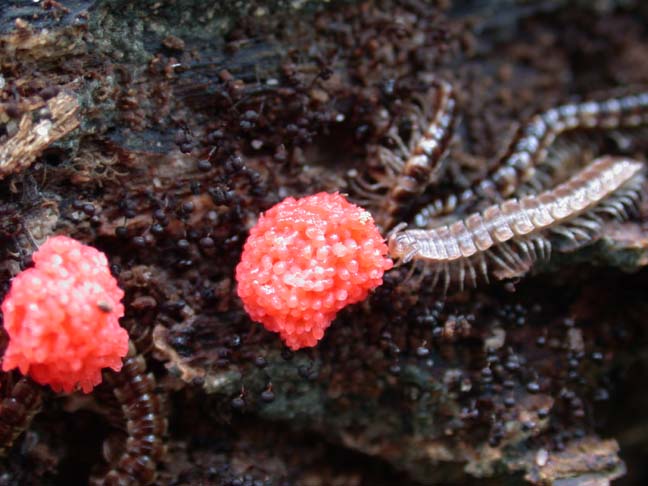
Flatback Millepede (Oxidus gracilis) exploring some Red
Raspberry Slime Mold (actually a coral mushroom): Other unidentifiable round millipedes are with them. This is the most common
flat (VS round) millipede in North America. Photo by Ken Clark.
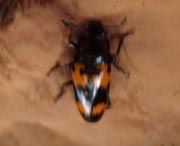
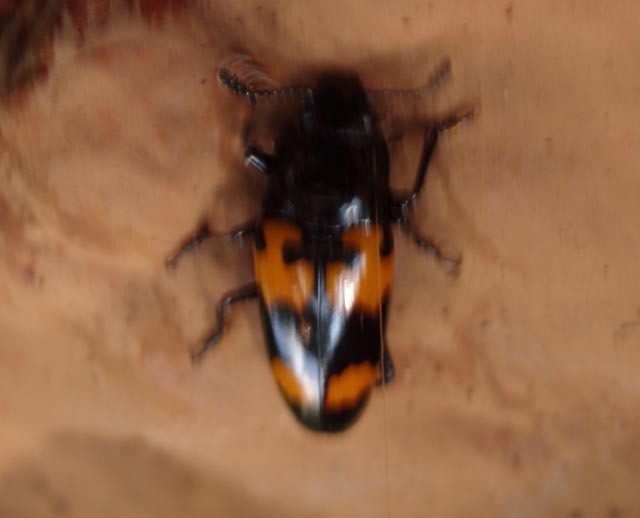
Pleasing Fungus Beetle (Megalodacne heros): As the name applies, they live on fungi. This is a member
of a large group colonizing Hemlock Varnish Shelf. Location: Pocosin Hollow Tr, SNP, VA.
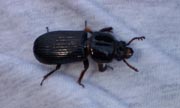
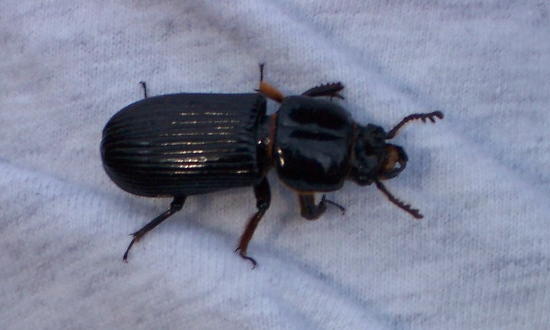
Patent-leather Beetle (Odontotaenius disjunctus): Can grow up to 1.5 inches. Lives in and feeds upon decaying wood. Location:
Tuscarora Tr, Massanutten MT, VA.
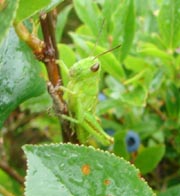
Differential Grasshopper (Melanoplus differentialis):
Herringbone pattern on hind legs. Found in grassy areas and crops. Location: DSN, MNF, WV. Photo by Patrick Roberts.
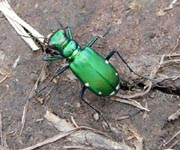
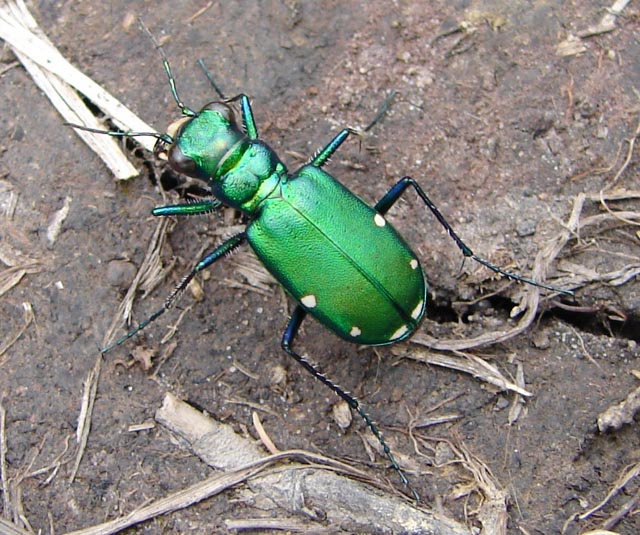
Six Spotted Green Tiger Beetle (Cicindela sexguttata):
Very attractive as beetles go. Eats spiders and insects. Will bite humans. Location: DSN, MNF, WV. Photo by Patrick Roberts.
|
|
|
|
|